Air Duct Cleaning in the Lehigh Valley: What It Costs, How It Works, and When You Actually Need It
If you're a homeowner in the Lehigh Valley, exploring duct cleaning allentown pa is a decision that hinges on real-world factors like home size, access, and moisture. This post breaks down typical costs in Allentown and nearby towns, walks you through the cleaning process step by step, and lays out the practical indicators that you actually need it so you can hire a qualified local pro with confidence. The aim is to separate legitimate IAQ improvements from marketing hype, helping you decide when to act and what to expect from licensed duct cleaners.
1. What duct cleaning in the Lehigh Valley typically costs and what drives price
In the Lehigh Valley, pricing for duct cleaning Allentown PA isn’t random. It tracks with scope, access, and the number of systems in play. For Allentown, Bethlehem, and neighboring towns, the base you see reflects home size, how many ducts and registers exist, and how reachable the ductwork is. A clear quote should separate ducts from any optional components and spell out containment steps rooted in industry practice. Use EPA guidance and NADCA expectations to judge what’s being promised and what’s not.
What counts as standard versus add-ons is where many misreads happen. A typical duct cleaning cleans ducts and registers and may include accessible air handling components. If the furnace blower, coil, or other reachable parts are added, the price climbs because the work expands beyond ducts and requires extra labor, equipment, and containment. This is a real trade-off: you get more complete system cleaning, but you pay more for it. When in doubt, verify that the quote references NADCA standards for containment and cleaning, and check that sanitizers are used only when necessary, per industry guidance.
Concrete example: a 2,100 square foot Allentown home with one straightforward system and easy duct access might see a ducts-and-register cleaning at the lower end of the spectrum. If the contractor also cleans the furnace blower and coil due to visible dust, the total can move toward the higher end. Larger homes, multi-system layouts, or restricted access will naturally push costs up further.
When comparing quotes, look for scope alignment and containment specifics. Ask for before/after photos, request NADCA-certified technicians, and insist on a written warranty and a defined turnaround. Avoid quotes that omit exact scope or rely on marketing promises. For context on expectations, review the EPA page and NADCA guidance to calibrate value against risk and need.
Takeaway: demand a written scope and containment plan before you approve any price; that’s how you avoid upsells and ensure you’re investing in real improvements to indoor air quality.
2. How the duct cleaning process works in most residential systems
Pre-inspection and assessment sets the course for any residential duct cleaning. A qualified tech checks for visible mold, moisture, pest activity, and duct access, then outlines exactly what will be cleaned and how containment will be established. Expect a scope that covers ducts, registers, the air handler or furnace compartment, and any accessible components that affect airflow, not a quick pass through the vents. NADCA standards guide the approach, and references to EPA guidance may be cited when applicable. Clear, written expectations up front prevent later disputes and upsells. See NADCA standards and EPA guidance for context.
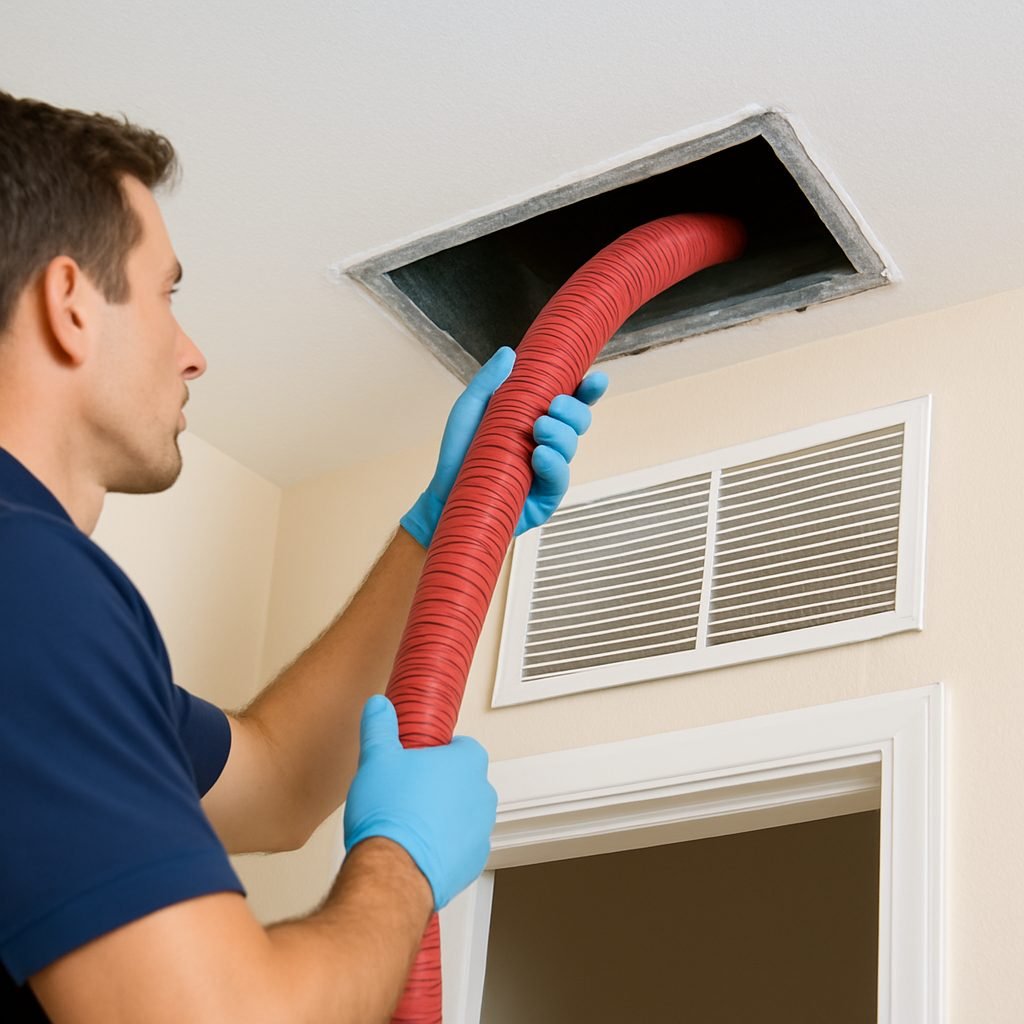
Containment and cleaning method hinge on a negative-pressure, HEPA-equipped vacuum. Duct walls are agitated with brushes or air tools to loosen debris, and all debris is drawn out while the system remains isolated from living space. The work area is sealed with plastic sheeting and zipper portals to keep dust contained and to protect floors and furniture. Sanitizers are reserved for specific mold or bio contaminants and only when justified by evidence, never as a default step. For containment best practices, see NADCA guidance linked above.
- Pre-inspection and assessment: mold/moisture/pest checks and access assessment.
- Containment setup: plastic barriers, portable air doors, and negative-pressure strategy.
- Duct cleaning and component access: ducts, registers, and accessible HVAC components as scoped.
- Post-cleaning verification: visual checks, simple diagnostics, and homeowner walkthrough.
After the cleaning, technicians perform a final verification: a visual cleanliness check and, where available, simple diagnostic measurements to verify air paths are clear. They should provide before/after photos and a written checklist that documents what was cleaned and what remains. A finish report with scope and warranty is standard and helps you hold the contractor to the agreed work. See NADCA consumer expectations for what good work looks like.
Concrete example: In a typical 1,800-square-foot Allentown home with accessible ducts, a standard duct-only cleaning takes about 3 hours. If the furnace blower, coil, or hard-to-reach ducts are included, plan for 4–5 hours.
Trade-off and limitation: More scope means higher cost and longer disruption, but skipping coil cleaning or plenums can leave dust recirculating in the system if there’s heavy buildup. The energy savings from duct cleaning alone are limited; pair cleaning with good filtration and duct sealing for any meaningful IAQ improvement.
Takeaway: insist on a complete, documented process with containment and a written warranty, and compare estimates based on scope and containment quality rather than price alone.
3. When you actually need duct cleaning in the Lehigh Valley
In the Lehigh Valley, you don’t schedule duct cleaning as a quarterly ritual. It’s a targeted intervention for when you can point to a duct-related issue, not a blanket IAQ fix. The EPA guidance makes this practical: most homes don’t need cleaning unless you can see mold growth, evidence of pests, or ducts visibly clogged with dust and debris; if you’re in Allentown PA or the surrounding towns and that criteria applies, a reputable contractor can make a meaningful difference EPA guidance.
Before you pull the trigger, fix the underlying problems. A cleaning helps only if moisture is controlled, filters are up to date, and the system is otherwise sound. If there’s ongoing humidity, leaky returns, or a compromised seal, cleaning alone will yield limited results. Expect a NADCA-standard crew to maintain containment and use a negative-pressure HEPA system; use sanitizers only when documented mold or bio contaminants justify them NADCA guidance.
Concrete example from Allentown: after a bathroom flood, a homeowner smelled a musty odor and found loose debris when popping a register. A NADCA-certified team inspected and found moisture behind a duct run; they contained the work, cleaned the ducts and registers, remediated the damp area, and replaced a short duct segment. The price landed around $650, and the odor disappeared within a day or two, with IAQ improving thereafter. It shows cleaning is most effective when paired with moisture remediation.
Don’t assume mold spores are always in the ducts; sometimes contamination is on the surface of damp duct walls requiring remediation rather than brushing alone. And remember: cleaning is not a cure for chronic allergen exposure from outside air—you still need good filtration and regular maintenance to keep benefits lasting.
- Visible mold growth in ducts or on accessible components
- Musty odors that persist after filter changes and humidity control
- Recent water damage or evidence of pests in ductwork
- Post-construction cleanup or HVAC replacement
- Ongoing allergy or asthma symptoms that persist despite good filtration
4. Key questions to ask before hiring a duct cleaning contractor
In practice, the cheapest duct cleaning quote often hides the real scope. Homeowners in Allentown and the Lehigh Valley encounter bids that look similar but miss critical steps like containment and post-cleaning verification. A solid contractor will spell out exactly what gets cleaned and what stays sealed off so you can compare apples to apples.
Ask for NADCA certification and proof of insurance. NADCA-certified technicians follow containment and cleaning standards that reduce dust escape and equipment damage. Without certification, you are relying on promises rather than proven practice. See NADCA's consumer guide here and EPA guidance here.
Define exactly what will be cleaned. Specify ducts, registers, air handling components, coil, and blower, and whether furnace cleaning is included. Be wary of claims to sanitize ducts without a visible problem; sanitizers should be used only when necessary for mold or bio contaminants.
Require a written scope, a firm price, and a timetable. Ask for before and after photos and a written warranty. If the price changes at the job or the contractor starts adding components mid-work, that is a red flag.
Turnaround time and access matter locally. If the system sits in a tight crawlspace or in a multi-story home, ensure an access plan and safety measures. Clarify whether HVAC components beyond ducts are included and how that affects total cost.
Ask for references and recent local projects. A reputable local pro should happily share contacts and photos. You can verify results and confirm whether the contractor delivered measurable improvements.
Use case: A homeowner in Allentown faced two bids. One quote promised complete cleaning of ducts, registers, blower, and furnace components at a fixed price; another offered ducts only with later add-ons for coil cleaning and sanitizer. The first quote provided a clear scope, containment plan, and predictable price, while the second led to surprise charges after work began.
- NADCA certification and insurance: Do technicians follow NADCA standards for containment and cleaning?
- Scope of work: What exactly will be cleaned and what will be left untouched? Are chemical biocides or sealants used?
- Documentation and warranties: Can they provide before/after photos, references, and a written warranty?
- Timing and access: What is the expected turnaround time and what access arrangements are needed?
- Pricing transparency: Are there upfront prices, potential extras, or service packages? How are tune-ups or maintenance handled?
Real-world takeaway: with clear questions, you can avoid being upsold; a contractor who can answer these points confidently usually delivers a cleaner, safer result. For IAQ context that complements duct cleaning, consider pairing the service with guidance from other specialists or resources on humidification and whole-house air purifiers. Also see local service areas like Zionsville.
Takeaway: treat quotes as contracts you will live with for a year—lock in scope, price, warranty, and containment before you commit.
5. What duct cleaning can influence and what it cannot
Duct cleaning in the Lehigh Valley moves the needle only when it sits inside a broader IAQ plan and routine maintenance. The EPA notes that most homes don’t need cleaning unless you have visible mold growth, a pest issue, or ducts clogged with debris, and you should demand containment and cleaning standards from the contractor EPA guidance. A NADCA standards-compliant pro should follow industry practices for containment and cleaning NADCA standards. In practice, that means you’re looking for more than a cosmetic sweep—you’re assessing whether the service addresses actual contaminants and uses proper negative-pressure equipment and verification.
- Indoor air quality improvements when paired with clean filters and humidity control.
- Allergen reduction through actual removal of dust, mold, and debris from accessible ducts, especially where pests or moisture were present.
- Targeted cleaning of accessible components like registers and air-handler housings to cut contamination pathways into rooms.
What it cannot influence:
- Pollutants in living spaces still accumulate and require ongoing filtration and cleaning of surfaces.
- Mold remediation is separate; cleaning ducts without addressing moisture sources won't prevent recurrence.
- Energy efficiency gains are limited; sealing ducts and ensuring proper overall HVAC efficiency produce bigger impact.
Use case: In a three-bedroom Allentown home, a basement moisture problem produced a musty odor and visible dust in ductwork. After duct cleaning, the odor diminished, but real relief came only after humidity controls were added and the basement moisture source was remediated; this shows duct cleaning is most effective when paired with moisture management and duct sealing.
Trade-off: If the system has leaks, cleaning ducts without sealing them is a temporary fix that invites quick recontamination. And avoid overusing chemical biocides or sealants unless a mold or bio-contaminant warrant exists; these chemicals carry health considerations and should be justified by professional inspection.
Takeaway: pursue duct cleaning only when a qualified pro identifies a concrete need, and always pair it with filtration upgrades, humidity management, and duct sealing as the bigger IAQ levers.
6. Why Lehigh Valley HVAC Pros is a strong choice for duct cleaning in the Lehigh Valley
Lehigh Valley HVAC Pros stands out because local knowledge translates to fewer missteps and faster, more accurate service. When you’re cleaning ducts in Allentown PA, you’re dealing with homes that share layout quirks, attic access realities, and moisture patterns that generic national outfits don’t anticipate. Our approach combines full containment, verification, and clear pricing so homeowners know what they’re paying for from the start.
What sets Lehigh Valley HVAC Pros apart in practice
NADCA-certified technicians lead the crew, following containment and cleaning standards that minimize dust escape and ensure the job is verifiable. We publish transparent pricing, provide written estimates, and schedule around your calendar, not the other way around. After service, we walk the home with you and show before/after photos to confirm what changed.
- Local coverage across Lehigh and Northampton counties, including Allentown, with familiarity with common duct layouts and access challenges.
- NADCA-aligned process for containment and cleaning, using negative pressure and HEPA filtration to prevent dust spread.
- Transparent pricing and clear warranties with written estimates and predictable service in your time window.
Concrete example: In a recent Allentown home, a family noticed a musty odor after a remodel. LVHVAC Pros performed a controlled duct cleaning with negative pressure, sealed the system, and cleaned the registers. Within hours the odor dissipated, and the homeowners appreciated the follow-up checklist and photo evidence of the cleaned ducts.
Beyond the initial cleaning, we offer a practical maintenance approach: a short post-cleaning checklist, recommendations for air filter replacement cadence, and a reminder to tie duct cleaning to dryer vent cleaning when applicable. This helps sustain IAQ improvements between visits and aligns with energy efficiency goals.
A practical trade-off you should expect: pricing that reflects thorough containment and post-cleaning verification. Cheaper quotes may skip containment steps or verification, which can leave IAQ improvements less certain in the Lehigh Valley climate.
Takeaway: Prioritize local credibility and a documented scope over flashy marketing. When you call for a quote, ask for a written estimate, a containment plan, before/after photos, and a warranty to ensure real value.